Wellbeing: you do not have to do everything right to feel good
This is a research-based guide. Pifada has not conducted its own product testing, and this guide should not be read as a “best-in-test” ranking. We use official Swedish and European sources, clear selection criteria and practical relevance for everyday life in Sweden.

Pifada is funded by advertising. When you click certain links or make a purchase through them, we may receive a commission from our partners. This does not change the price for you. Read more in How Pifada evaluates and Affiliate links.
Wellbeing can mean many things. On this page, we use the word in a practical everyday sense: how to choose and use skincare, haircare, body care, sun protection, fragrance and makeup without making your routine more complicated than it needs to be.
This guide is written for people living in Sweden, including those who are new to the country and may not yet know the local shops, product labels, authorities or consumer rules. You do not need to recognise every Swedish brand or understand every local term. The aim is to help you identify what a product is for, what information matters and what to check before buying.

It is not about reaching a certain beauty standard or following every new trend. The goal is to understand what a product should do, whether it suits your everyday life and whether you will actually use it. Products without a clear role can often be left out.
Swedish seasons can also change what feels practical. Cold wind, rain, dry indoor air, hats and strong summer sun may affect how skin and hair feel. A useful routine can therefore change with the season instead of remaining identical throughout the year.
This is editorial guidance about cosmetics and everyday product choices, not medical advice. It does not replace an individual assessment for persistent symptoms, clear skin reactions or other health concerns. You will not find a fixed shopping list here, but principles for making more considered choices.
A simple routine that works in everyday life
A useful routine does not need many steps. Start with products that solve a clear need and are easy to use even on busy days.
Cleansing is mainly useful for removing makeup, sunscreen and dirt. If the skin feels tight after washing, a milder product or a smaller amount may work better.

Moisturiser is most relevant when the skin feels dry. Compare texture and fragrance so the product works at the time of day when you need it.
Sunscreen should work with the rest of the routine and be easy to apply in a sufficient amount. Check the protection level, directions and whether it can be reapplied during the day.
For hair, a shampoo suited to the scalp and conditioner applied where the lengths need it are often enough. Masks, oils and styling products are optional steps that only need to stay if they make a clear difference.
Add one product at a time. This makes it easier to understand what works and what does not need to be purchased again.

Climate and seasons affect skin and hair
The Swedish climate can shift quickly between cold outdoor conditions and warm, dry rooms. During autumn and winter, skin may feel tighter and hair may become drier or more static. Wind, rain and hats can also affect comfort and styling. This does not mean everyone needs a heavier routine, but it can be reasonable to adjust one product at a time when the current routine stops feeling practical.
A richer cream or a richer conditioner may suit someone whose skin or hair lengths feel drier during colder months. It is less useful if the product remains unused, feels too heavy or creates a need for extra cleansing. Check whether the change really follows the season, which parts of the routine already work and whether one small adjustment is enough.
Spring and autumn can be less predictable than the temperature suggests. One day may bring cold wind and rain, while the next has strong sun. If you commute, cycle, spend a lot of time outdoors or move between different indoor environments, a simple routine with practical packaging may be easier to maintain. A large collection of seasonal products may be unnecessary when only one step needs to change. Consider what needs to be carried, used quickly or combined with clothes and makeup.
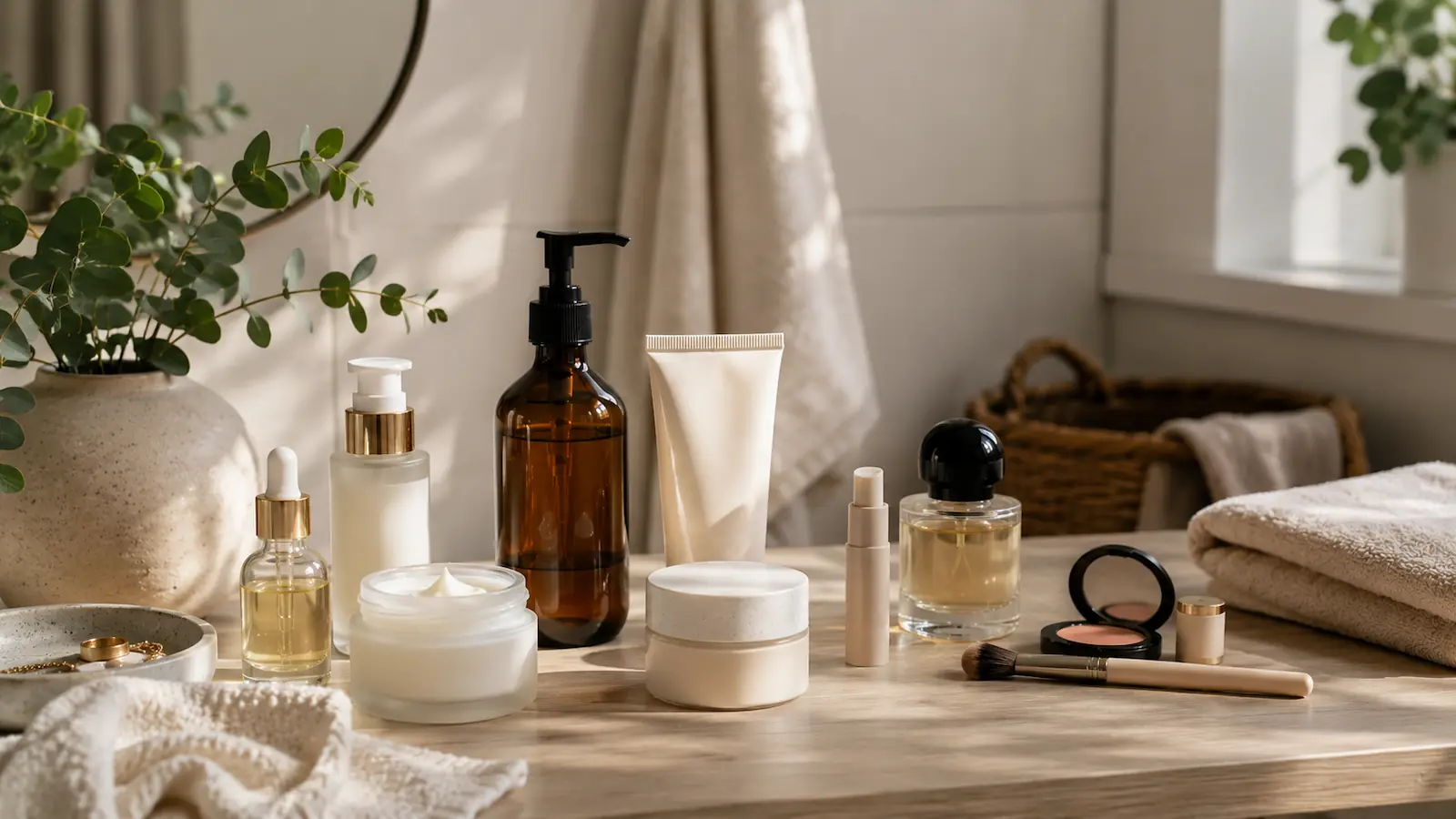
Temperature is not a reliable measure of UV radiation. The Swedish Radiation Safety Authority, Strålsäkerhetsmyndigheten, describes the UV index as a measure of the UV radiation reaching the Earth’s surface and recommends that most people protect themselves when the index is 3 or higher. In Sweden, the UV index often reaches 4–7 around midday in summer. Snow can reflect UV radiation and increase exposure on clear winter or spring days.
Checking the UV index is particularly useful before spending a longer period outdoors, being outside around midday or moving through snowy and open areas. Warm weather or a blue sky alone does not show the level of UV exposure. Check the current UV forecast, how long you will be outside, which areas are covered by clothing and whether your sunscreen can be used and reapplied in that situation.
During the darker months, the main change is often the contrast between cold weather outside and dry heated air indoors. Use how your skin and hair feel, and how products work in daily life, as your guide.
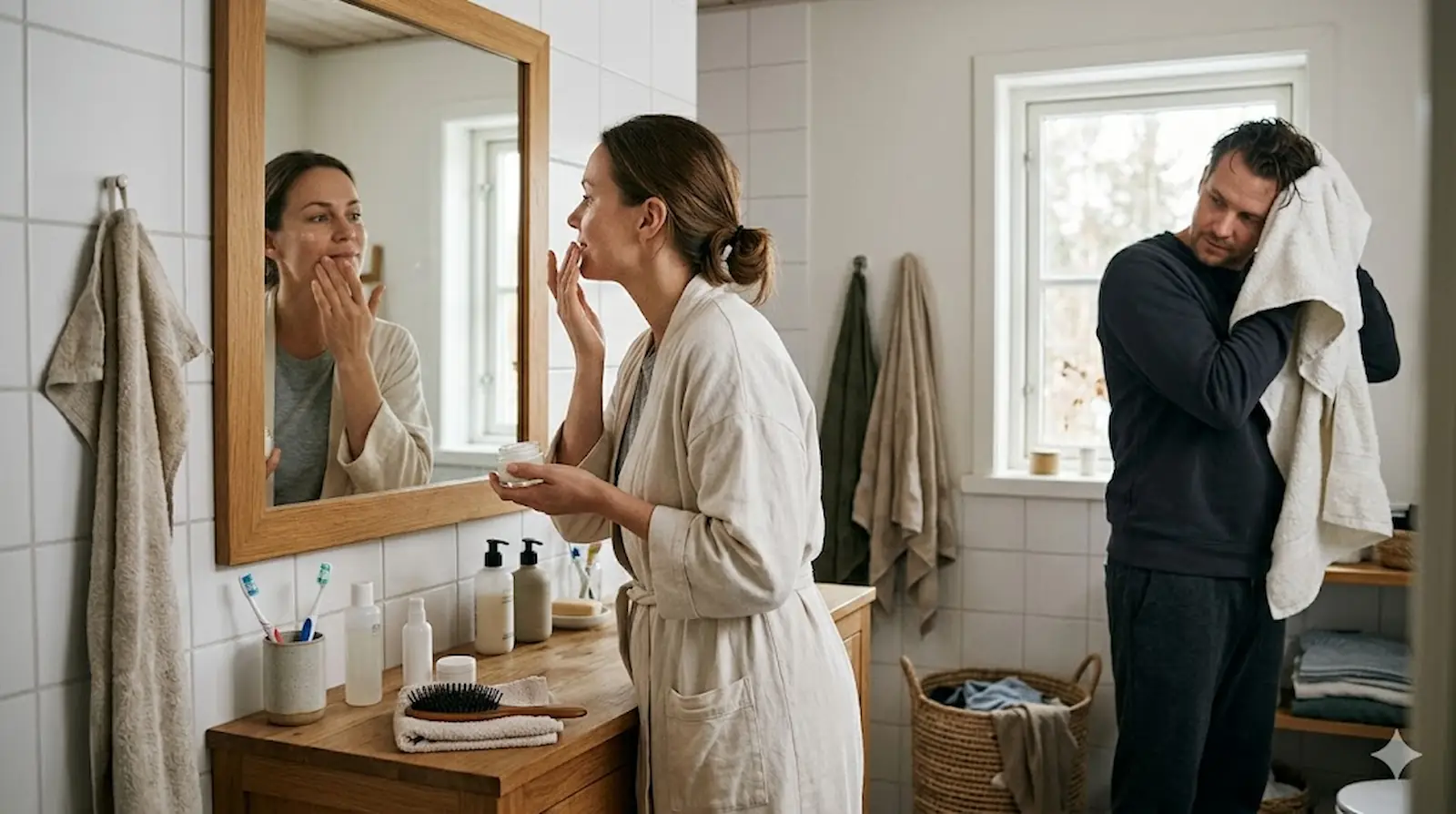
Skincare, haircare, body care, fragrance and makeup in practice
Cosmetics can cleanse, moisturise, protect, add fragrance or change appearance. The EU Cosmetics Regulation provides the common legal framework. In Sweden, supervision is shared between the Swedish Medical Products Agency, Läkemedelsverket, and municipal authorities. Läkemedelsverket also provides national guidance. For someone new to Sweden, these Swedish names are useful to recognise when checking official information.
The Swedish Medical Products Agency’s information on cosmetic labelling explains what information should help consumers understand a product’s purpose and use it safely. Check the packaging for function, directions, precautions, period after opening and ingredients when relevant. Even when a product page is in English, the packaging or shop information may use Swedish terms, so focus on the function and required safety information rather than the brand name alone.
Skincare
A cleanser, moisturiser and sunscreen when the UV level requires it can cover the most common everyday skincare needs. Serums and specialised products are most relevant when you can explain the function they add. Pay attention to texture, fragrance and how a product works with makeup or other steps.

A richer cream may suit skin that feels tight in cold weather or dry indoor air, while a lighter lotion is often more practical during the day. Change one thing at a time and assess how the skin feels after a few hours.
Cosmetics should not be presented as treatments for diseases or persistent skin conditions. The Swedish Medical Products Agency’s rules on cosmetic marketing explain that claims must not give the impression that a product has properties or functions it does not have. If a product promises to cure, treat or solve a medical problem, examine the claim carefully and seek professional advice when appropriate.
Haircare
Separate the needs of the scalp from the hair lengths. Shampoo is mainly used on the scalp, while conditioner or a mask may be useful where the lengths feel dry or become tangled.
Oil, leave-in products and heat protection can be practical for heat styling or difficult-to-manage lengths, but several overlapping products may make the hair feel heavy. Read how the product should be applied and use the smallest amount that gives the intended result.
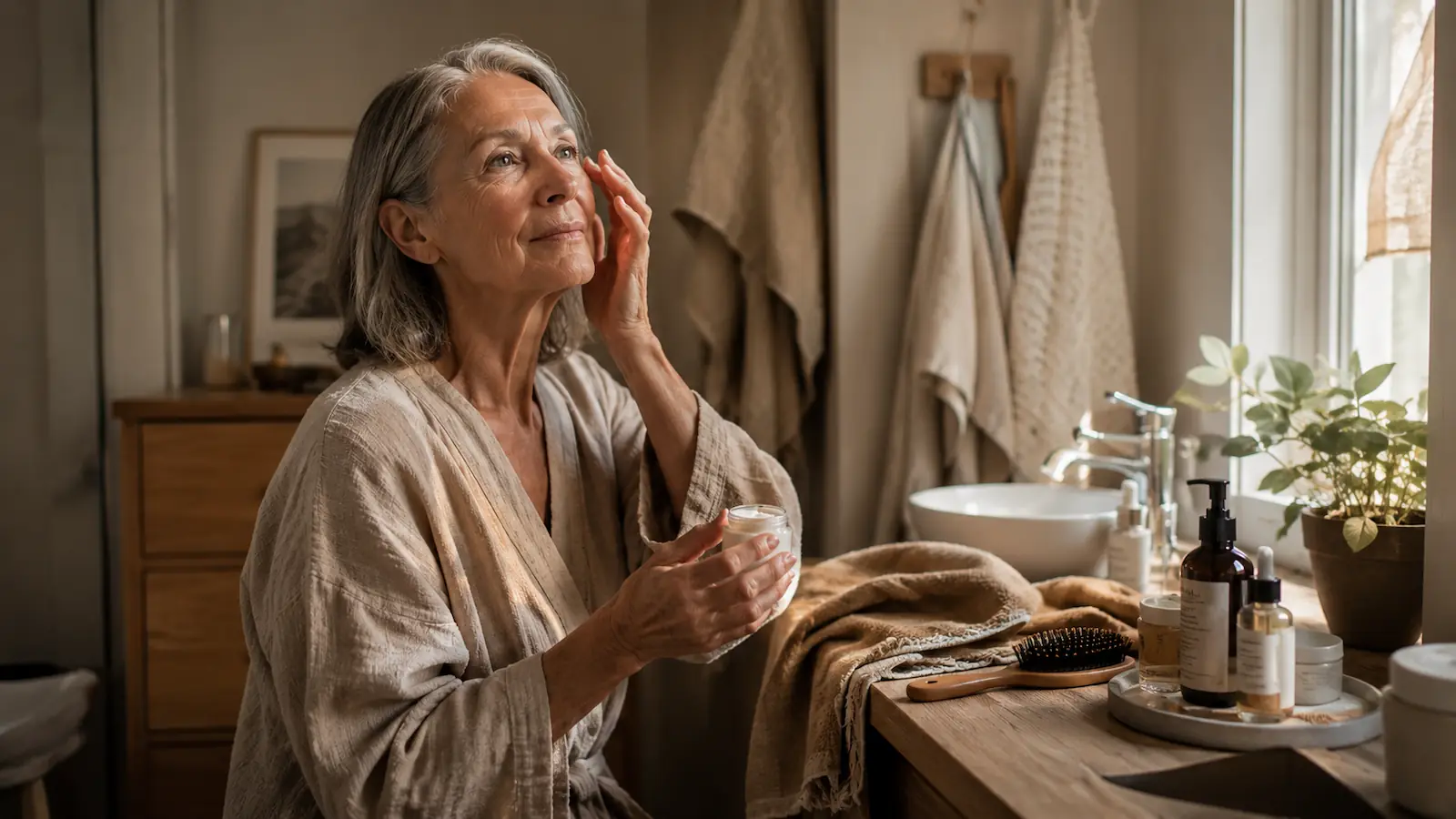
Body care
Body care usually means cleansing, moisturising and dealing with occasional needs such as dry hands. A light lotion can be practical after a shower, while a richer cream may work better on drier areas if it does not feel sticky under clothing.
The same product does not have to work everywhere. Read the intended area of use and precautions on the packaging, especially if the skin stings or the fragrance feels too strong.
Fragrance and perfume
Fragrance is a personal choice. Try perfume on the skin for a few hours and compare concentration and bottle size, especially if you rarely use fragrance or spend time near people who are sensitive to scents.
Samples and smaller bottles can reduce the risk of an unsuitable purchase. When buying online, check who the seller is, the product information and the return conditions.

Makeup
Makeup can add colour, even out the complexion or change your look, but it should not be presented as a treatment for skin problems. Consider how many steps and tools you actually want to use and how the product works with skincare and sunscreen.
Shades and finishes are harder to judge on a screen. Online shopping works best when you already know the product or have clear shade references. Under Swedish and EU consumer rules, sealed goods that are unsuitable for return for health or hygiene reasons may be exempt from the right of withdrawal after the seal is broken. This does not automatically apply to every opened cosmetic product. Read the shop’s terms about seals, hygiene exceptions and returns before purchasing.
The important point is that the product has a clear function, suits everyday life and offers reasonable value—not that an entire range is bought at once.

When trends make choices harder
Trends can be a quick way to discover new textures, colours and ways to use a product. At the same time, a product may appear so often in your feed that repetition starts to feel like proof that you need it. Popularity shows that something is receiving attention, not that it suits your skin, hair, budget or everyday life.
It is also important to separate personal recommendations from advertising. Swedish rules require advertising to be clearly identifiable, and hidden marketing is prohibited. The Swedish Consumer Agency, Konsumentverket, explains in its guidance on influencer advertising that a post may count as marketing when an influencer receives money, products or another financial benefit. The advertising label should be clear immediately, not only after reading the entire post.
Trend content can offer inspiration, but it is weaker evidence when you need an exact shade, have reactive skin or are working within a strict budget. First check whether the post is advertising and what relationship the creator has with the brand.

Ask yourself before buying:
-
What specific need should the product solve?
-
Is the product’s role clear, or is the interest mainly based on before-and-after images, a popular phrase or a strong reaction?
-
Would I still choose it if it were not appearing everywhere right now?
-
How often will I realistically use it after the initial novelty has passed?
-
What do I need to check about labelling, claims, price, quantity and return conditions?
When a product claim sounds impressive, it is more useful to examine what it actually means than to focus on one word. This is especially relevant when comparing an unfamiliar product with a simpler alternative. Do not draw conclusions from a short video, a before-and-after image or a claim without context. Read what the effect refers to, how the product should be used and whether the promise concerns cosmetic appearance or tries to sound like medical treatment.
Waiting until the next day can be useful for more expensive or trend-driven purchases. It is rarely necessary when replacing a product you already know. During the pause, compare price, quantity and return conditions.
A trend can be a suggestion, but it is not a complete decision. The most considered choice is rarely the product that appears most often; it is the one that suits how you will use it.

How to choose more carefully
A considered choice does not require specialist knowledge. It is often enough to use the same six criteria when comparing skincare, haircare, body care, fragrance or makeup. The Swedish Medical Products Agency’s labelling guidance shows which information helps consumers understand a product’s purpose and safe use. The Swedish Consumer Agency’s advertising rules help when offers and product promises need a more critical assessment.
Need. Start by describing what the product should do in your everyday life. “I need a hand cream that I can use at work” is clearer than “I want to improve my routine”. If something you already own covers the need, a new product is rarely the most practical choice.
Use. Think about when, where and how often the product will actually be used. A large jar may have a good price per millilitre but be impractical in a gym bag or when travelling. For a product that needs to be reapplied during the day, a smaller package that closes securely may be more valuable than a larger one.
Fit. The product needs to suit both the person and the rest of the routine. Check texture, fragrance, shade, application and how it works with other products. A popular sunscreen is a poor fit if it pills under makeup or feels so uncomfortable that you apply too little.
Climate and season. Judge the product in the environment where it needs to work. A rich cream may be practical during cold months but too heavy on a warm day, while a light hair product may work at home but offer too little control in rain and humidity. It is usually more reasonable to adjust one step for the season than to replace the entire routine.
Claims. Read the specific function, directions and precautions instead of relying on words such as “revolutionary”, “clean” or “professional”. Claims should make sense in context, and cosmetics should not be presented as treatments for disease. Be particularly cautious when advertising promises fast, dramatic or medically worded results.
Value. Do not compare only the package price. Value also depends on how often the product is used, how much is needed each time, the period after opening and whether the packaging makes it easy to use the contents. A cheap product that does not suit you, or a large bottle that expires before it is finished, may cost more per actual use than a smaller and more practical option.
The criteria do not need to produce a perfect answer. They help separate a product that looks appealing from one that is likely to have a clear place in everyday life. Start with the need, check how the product will be used and let fit, season, claims and value determine whether the purchase still makes sense.
Routines for different everyday situations
The relative importance of these principles depends on time, budget, travel and how the skin or hair reacts.
If you want to keep the routine simple. Prioritise a few basic products and add a step only when it solves a specific need.
For an active life or travel. Prioritise products that are easy to carry, simple to open and unlikely to leak in a bag. A smaller package may be most practical, especially for sunscreen that needs to be reapplied.
For a limited budget. Prioritise products used often and compare the cost per actual use, period after opening and whether the contents can be used up.
For sensitive or reactive skin. Introduce one new product at a time and read directions, precautions and ingredients when relevant. Persistent or clear symptoms require professional assessment.
How we assessed the topic
The material is research-based and is not built on our own product test or a ranking of individual products. The assessment uses official Swedish and European sources and practical relevance for everyday life in Sweden.
We use six criteria: need, use, fit, climate and season, claims and value.
We use Läkemedelsverket for information about cosmetics, labelling and product claims; Konsumentverket for advertising and consumer information; Strålsäkerhetsmyndigheten for the UV index; and the EU Cosmetics Regulation for the legal framework. The Swedish names are included because these are the names you will see on official websites and in local information.
We do not assess medical effectiveness, and the material does not replace individual advice. When a claim goes beyond a cosmetic function or symptoms are persistent, use reliable sources, read the labelling and seek professional assessment when needed.
The goal is not to find a universal winner. It is to assess whether the intended use is clear and whether the product still feels worth the money after the novelty has passed.
Frequently asked questions
How many steps does a simple routine need?
There is no fixed number. Start with products that have clear functions and add only something that solves a specific need.
Does the routine need to change for the Swedish climate?
Not automatically. Adjust one step at a time when the weather or indoor environment changes.
When should I check the UV index?
Check the UV index before spending a longer time outdoors, especially around midday, in summer or in snow. Temperature does not show how strong the UV radiation is.
How do I know whether a product suits me?
Assess the texture, fragrance, shade, packaging and how the product works with the rest of the routine. If your skin is sensitive, introduce one new product at a time.
Is a more expensive product always better?
No. Value also depends on use, quantity, period after opening and whether the contents can be used up.
How should I assess advice from influencers?
First check whether the content is advertising and what relationship the creator has with the brand. Then assess whether the product’s function suits your needs and budget.
What should I check when buying cosmetics online?
Check the seller’s details, product information, labelling, price and quantity, and the return conditions. Sealed goods that are unsuitable for return for health or hygiene reasons may be exempt from the right of withdrawal after the seal is broken, but this does not automatically apply to all opened cosmetics.
Sources and further reading
-
Swedish Medical Products Agency – cosmetic labelling and product claims: used in “Skincare, haircare, body care, fragrance and makeup in practice” and “How to choose more carefully”.
-
Swedish Radiation Safety Authority – UV index: used in “Climate and seasons affect skin and hair” and the UV index FAQ.
-
Swedish Consumer Agency – advertising rules, influencer advertising and buying cosmetic products: used in “When trends make choices harder”, “How to choose more carefully” and the FAQs about influencer advice and online purchases.
-
EUR-Lex – Regulation (EC) No 1223/2009 on cosmetic products: used in “Skincare, haircare, body care, fragrance and makeup in practice” and “How we assessed the topic”.