What do we mean by style and self-care services?
When we think about style and self-care, we often think about products. But many choices are just as much about services, subscriptions and ongoing agreements. That can include optics and contact lenses, salon visits, beauty boxes, regular product deliveries or other services that become part of everyday life over time.
That means it is not always enough to ask what something costs or what is included. It is just as important to consider how much time, follow-up and flexibility the service requires after you have ordered, subscribed or entered into an agreement.
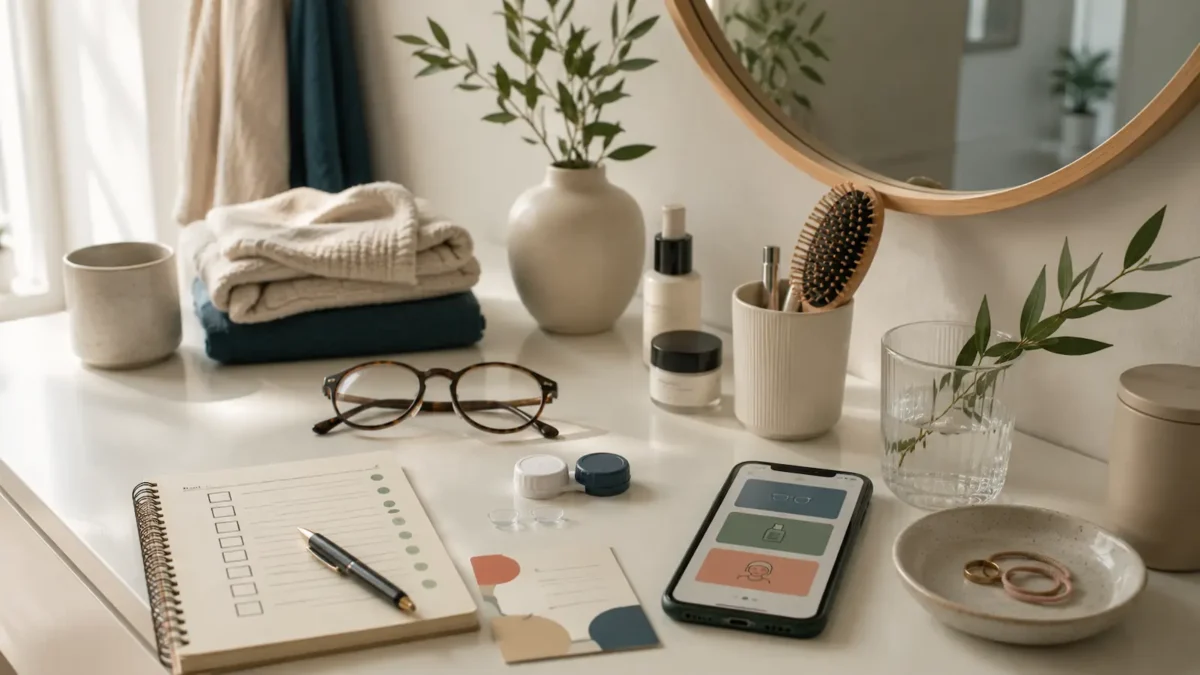
A good service should make style and self-care simpler. It should help you stay organised, save time or make it easier to get what you actually use. If the solution creates more pressure, more costs or more things to keep track of, it is not necessarily a good choice — even if the offer looks attractive on paper.
Here, we look at how to assess services within style, optics, beauty and self-care in a practical way — without paying for more than you actually use.
What do we mean by style and self-care services?
When we talk about services within style and self-care, we do not mean medical treatment, fitness or general home services. We mean services that affect how you take care of yourself in everyday life — and how easy it is to keep doing that over time.
That can include opticians, glasses agreements and contact lenses. It can also include subscriptions for skincare or haircare products, beauty boxes with regular deliveries or online solutions that make it easier to order products you use regularly.
For some people, it may also include salon services, haircuts, colour treatments or other appointments that become part of a regular routine. In some cases, it can mean services for tailoring, repair or maintenance of clothes and accessories — especially when the goal is to use things longer and buy less on impulse.
The common thread is that the service should create more overview and less friction. It should make it easier to take care of style, self-care and daily routines without spending unnecessary time on planning, orders or follow-up.
When a service genuinely makes style and self-care easier
Not every service is worth paying for. Some make everyday life easier. Others simply add another subscription, another agreement or another cost that needs to be followed up.
A service usually gives the most value when it solves a specific problem. Maybe it saves you time, makes it easier to find products that fit, or helps you avoid making the same choices again and again.
An optician can be useful if you need help checking your eyesight and finding the right glasses or contact lenses. A salon service can be worth the money if it is used regularly and makes everyday life easier. A beauty subscription can work well for people who already use the same products over time and want regular deliveries.
Some services are not about buying more, but about using what you already have for longer. Tailoring, repair or maintenance of clothes can be more practical than replacing garments that still work well.
A good service should fit your life, not just look tempting when you order it.
When services create more pressure than value
Not every service marketed as practical or inspiring actually makes everyday life easier. Some can instead lead to more expenses, more decisions and more follow-up than you really want.
Beauty subscriptions are a typical example. If the products are used up between each delivery, the subscription can be practical. If the products pile up in drawers and cupboards, it is worth asking whether the service meets a real need — or simply encourages more consumption.
The same applies to salon and wellbeing services. A treatment that fits into your everyday life can be valuable. But some services are built around the feeling that you constantly need to maintain, upgrade or book the next appointment. Then the costs and expectations can grow faster than the value.
Within optics and subscription solutions, it is also worth looking carefully at what you are actually paying for. Packages with several services can seem simple at first glance, but it is not always easy to understand what is included, what is optional and what may cost extra later.
Also pay attention to automatic renewal, binding periods and offers that start with a low introductory price. “First month cheap” can be a good offer, but only if you know what the agreement costs afterwards and how easy it is to cancel.
Many services are marketed through social media and influencers. That does not mean the recommendations are necessarily bad, but it is useful to be aware of the difference between personal experience and advertising.
If a service makes you buy more, follow up more or feel more inadequate, it may not be the right choice for you.
What should you check before you choose?
Before you order a service, start a subscription or enter into an agreement, it is worth spending a few minutes assessing whether the solution actually fits your needs. It is not only about price, but also about how well the service works over time.
Need: What are you trying to solve? Do you need help with vision correction, regular product deliveries or a service that makes a routine simpler? The clearer the need, the easier it is to assess whether the service gives value.
Use: Will you actually use the service? Many subscriptions look attractive when you order them, but become less useful if the products or benefits are rarely used in practice.
Price over time: Look at the total cost, not just the introductory offer. A low price for the first month says little about what the service will cost over a full year.
Binding period and cancellation: How easy is it to end the agreement? Before you order, you should know which rules apply to cancellation, renewal and any binding periods. Forbrukerrådet has information about subscriptions, agreements and consumer rights for online shopping.
Terms: What is actually included? Some services are marketed with one main benefit, while add-ons, delivery costs or extra products come on top. Read the terms before you decide.
Professional competence: When the service involves professional advice or individual fitting, you should check what competence stands behind it. This can be especially relevant within optics and other services where professional guidance plays an important role.
Claims: Be careful with services that promise more than they can document. This is especially relevant for marketing of beauty and self-care products, where EU cosmetics rules require documentation and product information.
Pressure: Finally, it can be useful to ask why the service feels attractive. Is it because it solves a specific need, or because the marketing creates a feeling that you ought to buy it?
The more simply you can explain why a service fits you, the more likely it is that it will actually be used — and still give value after the first enthusiasm has faded.
Services for different needs
The same service does not suit everyone. What is practical for one person may be unnecessary for another. That is why it is better to start with how you actually live, shop and use services in everyday life.
For those who want to keep things simple
If the goal is fewer agreements and less to follow up, it is often smart to choose solutions with clear terms. Look for services that are easy to understand, easy to cancel and do not require you to keep track of campaigns, points systems or constant new offers.
For those who use glasses or contact lenses
For people who use glasses or contact lenses regularly, optical services can be a natural part of everyday life. This can include eye tests, guidance, contact lens deliveries or agreements that make it easier to access products you use throughout the year.
Before choosing a solution, you should check what is included, how the subscription works and how flexible it is if your needs change.
For those who often buy beauty products
Beauty subscriptions and regular product deliveries can be practical if you already know which products you use. If you rarely use up what you already have, a subscription may not give as much value.
For those who want to take better care of their clothes
Some services are not about buying something new. Tailoring, repair, cleaning and maintenance can help clothes and accessories last longer and work better in everyday life.
For those who like beauty, but not the pressure
Many people enjoy skincare, haircare or beauty products without wanting it to become a project. Then it is worth looking for services that focus on simplicity and flexibility rather than ever more products and upgrades.
A good service should help you find what works for you. It should not create a feeling that you constantly need to buy more, follow new trends or improve yourself.
Not every service is worth choosing just because it seems practical
Practical is not always the same as necessary. A service can be easy to order, attractive to look at and easy to understand — without actually fitting your everyday life.
Automatic delivery can be useful if the products genuinely run out regularly. If you use the same contact lenses, the same haircare or fixed basic products, it can save time. But if the deliveries arrive faster than you use them up, the service quickly becomes more storage than help.
Beauty boxes and subscriptions with surprises can be enjoyable if you like trying new things and actually use the contents. If most of it is left unused, you are really paying for the feeling of variety — not for something that makes everyday life easier.
Salon services can also give value, especially if they save time or make a routine easier to maintain. But they should not become yet another thing you feel you have to keep up with.
Within optics, it is especially important that the price and terms are clear. An agreement can be practical if you understand what is included, how often you pay and what happens if your needs change.
A practical service is only practical if it actually fits the way you live.
Common mistakes when choosing style and wellbeing services
Choosing because it feels new and inspiring
Something new can feel good at first. But novelty rarely lasts. Before choosing a service, it is worth asking whether it will still be useful once the first enthusiasm has faded.
Not checking what the subscription actually includes
Beauty boxes, lens agreements and refill services can be practical, but only if you understand what you get. Check how often the delivery arrives, whether the contents can be adjusted, and what happens if you want to pause or change the agreement.
Forgetting cancellation and binding periods
It is often easy to start a subscription. It is not always just as easy to end it. Look for binding periods, automatic renewal and how clearly cancellation is explained before you order.
Paying for more than you use
More content does not always mean more value. More products, more benefits or more treatments can also mean more to tidy, choose and follow up. What matters most is what you actually use in everyday life.
Trusting advertising or influencers too much
Recommendations on social media can be useful, but they can also be advertising. That is why it is smart to look for clear labelling and consider whether the service fits your needs, not just the profile recommending it. Forbrukertilsynet explains how advertising in social media should be labelled.
Expecting results a service cannot promise
Be careful with services that promise major changes without clear documentation. Especially within cosmetics and self-care, claims should be sober and easy to understand. EU cosmetics rules require documentation and product information.
How we would approach it
No service fits everyone. That is why we do not start with the offer, the subscription or the campaign. We start with the need.
If a service solves a specific problem, saves time or makes a routine easier, it may be worth considering. If you are unsure whether you will actually use it, it is often wise to wait.
We would look at the total price, not just the introductory price. We would read the terms before ordering, check how easy it is to cancel the agreement and be sceptical of promises that sound better than they seem.
We would also ask whether the service makes everyday life simpler — or whether it just adds another cost, another subscription or another thing to keep track of.
When the difference between two solutions is small, we would usually choose the simpler one. Not because simplicity is always best, but because a solution that is easy to understand and easy to use is often used more in practice.
A good service should make style and self-care simpler — not give you even more to keep track of.
How we evaluated this topic
This article is a research-based guide. The aim is to explain how different services within style, optics, beauty and self-care can be assessed in practice — not to name winners or rank providers.
We have not carried out our own tests of the services mentioned here. The content is also not medical advice, beauty advertising or a list of recommended salons, clinics or subscriptions.
Instead, we have looked at the questions that are often important when assessing services that become part of everyday life over time. This applies to subscriptions, optical services, salon services and other solutions related to style and self-care.
When assessing these kinds of services, we place particular emphasis on:
- practical usefulness in everyday life
- clear needs and use cases
- simplicity and ease of use
- price over time, not just introductory offers
- flexibility and the option to cancel
- clear terms and costs
- caution around strong claims and promises
- real everyday value rather than marketing
- solutions that create less pressure, not more
Pifada may earn money through affiliate links in some future articles. This does not affect the criteria we use when assessing products or services. This hub article explains how we think about choosing services — it is not made to sell one specific solution.
Frequently asked questions
What does Pifada mean by style and self-care services?
We mean services, subscriptions and agreements that can affect style, self-care and daily routines. This can include optical services and contact lenses, beauty subscriptions, salon services and solutions that make it easier to maintain products or clothes you use over time.
Which services can belong here?
Examples can include opticians, glasses and lens agreements, beauty boxes, regular product deliveries, skincare subscriptions, haircare subscriptions or services for tailoring, repair and maintenance of clothes and accessories.
Are beauty subscriptions worth it?
It depends on how you use them. For people who regularly use the products being delivered, subscriptions can be practical. If the products pile up or are rarely used, the subscription may cost more than it gives back in value.
What should I check before choosing an optician or lens subscription?
Look at the total price over time, what is actually included, how flexible the agreement is, and how easy it is to change or cancel. It is also worth checking what professional guidance is offered if you need help finding the right solution.
How do I avoid paying for services I do not use?
Start with your need, not the offer. Think about how often you will actually use the service, and whether it solves a specific problem in everyday life. The clearer the value is, the easier it is to avoid unnecessary subscriptions and agreements.
Is the cheapest service always best?
Not necessarily. A low introductory price says little about what the service costs over time. What matters most is assessing the total price, flexibility, terms and how well the solution fits your needs.
How do I know if a service creates more pressure than value?
If the service makes you feel a constant need to buy more, order more or follow up more things than before, that can be a sign that it does not fit you. A good service should make style and self-care simpler — not give you even more to keep track of.
Is this medical advice?
No. This article is a research-based guide to assessing services within style and self-care. It does not replace advice from an optician, doctor or another qualified professional if you have specific concerns, reactions or need a professional assessment.
Where do fitness and sport belong?
Fitness, exercise, outdoor life and sports-related services belong at Pifada in the category Sport, Outdoor & Active Lifestyle. This guide is about services related to style, optics, beauty and self-care.
Sources and further reading
This guide is based on public consumer information, regulation and research on consumption, agreements and services. The sources are chosen because they can help you understand rights, marketing and how different services affect everyday finances and consumption habits.
- Forbrukerrådet – information about subscriptions, agreements, withdrawal rights, complaints and consumer rights.
- Forbrukertilsynet – guidance on marketing, campaigns, price marketing, influencer advertising and hidden advertising.
- EU cosmetics regulation – information about product safety, labelling, documentation and requirements for cosmetic products.
- SIFO / OsloMet – research on consumption, shopping habits, households and everyday choices.